
MindTrays Kept Things
51 wordless cards about the things we keep: a bundle of old letters, an iron key on a string, a chipped mug, an empty frame, a coat still on its hook, a bowl mended with gold. Warm analog film photographs, no people. For narrative therapy, grief work and life-story sessions — a way to talk about memory, loss and what we carry forward.

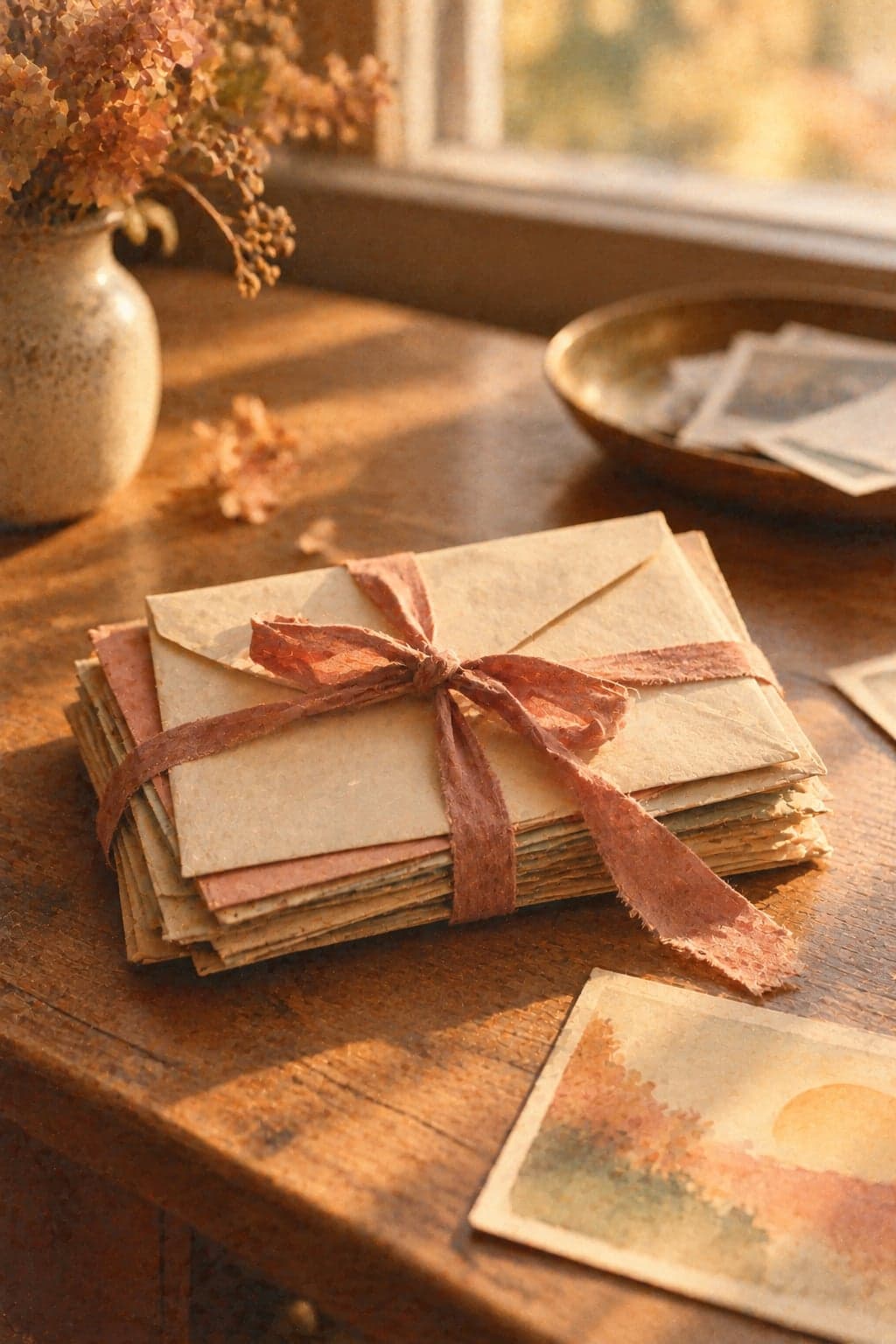

Kept Things is a 51-card deck about memory, loss and what we carry forward. A bundle of old letters, an iron key on a string, a chipped mug, an empty frame, a coat still on its hook, a bowl mended with gold — objects, not people. There is no text on the cards and no fixed meanings: each person chooses the thing that holds their story, and tells it.
What's inside
51 objects in seven drawers
Each group opens a different kind of memory — what was written, what was locked away, what was used every day, what was lost, what was mended and what was handed on.
Three cards up close
Three ways a thing can hold a person
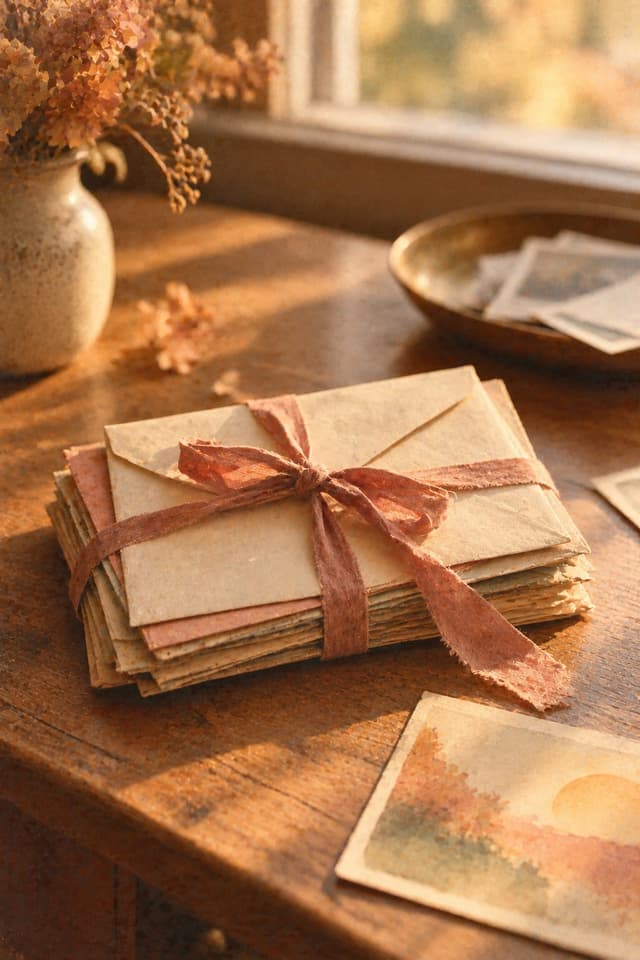
The tied letters
What was said that you still keep — and what was never written down?
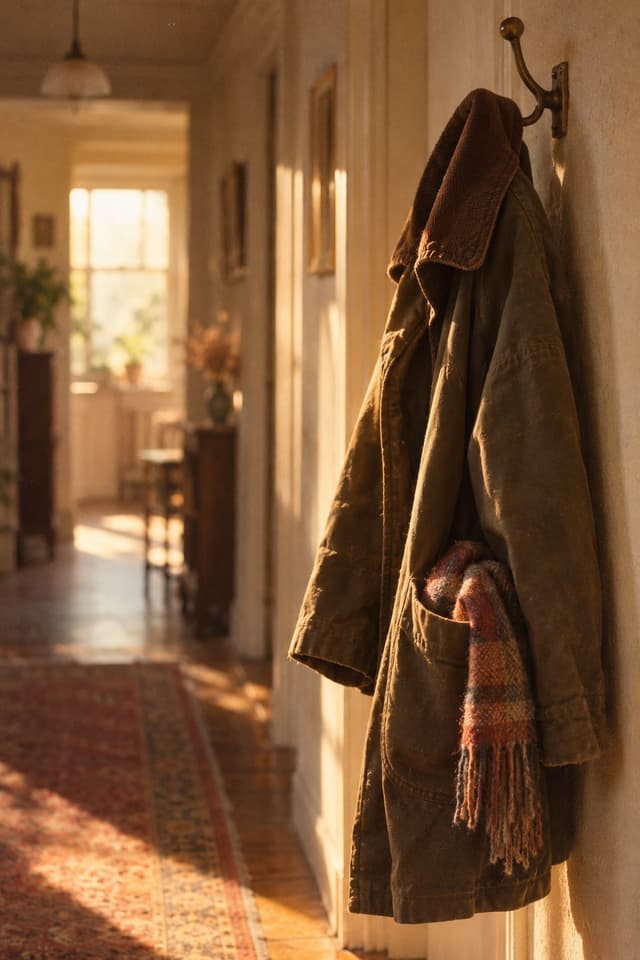
The coat on the hook
Who would come back for this — and what would you tell them?
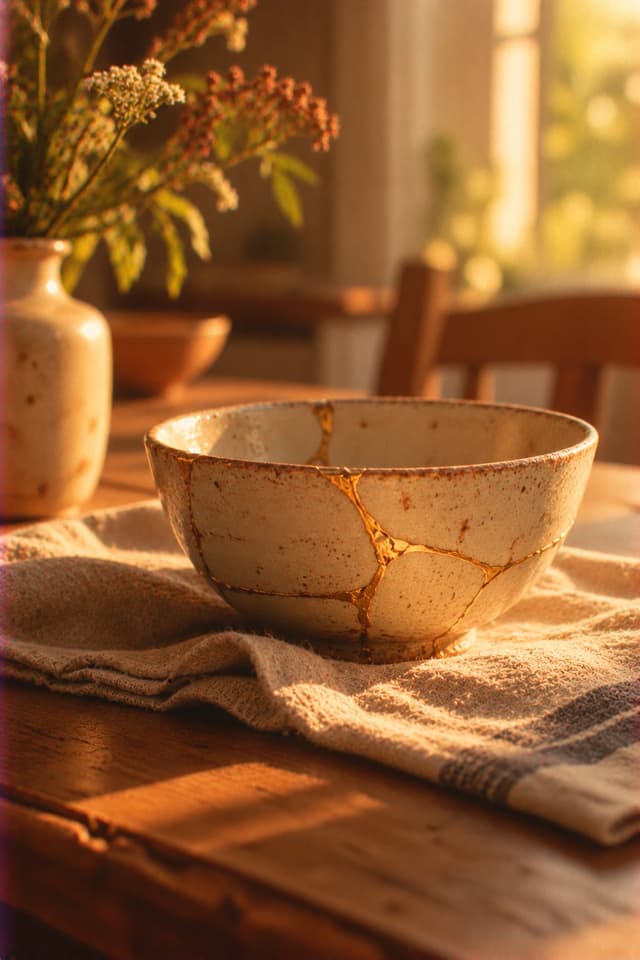
The mended bowl
What broke, and what does the repair show now?
When to reach for it
Sessions this deck was made for
Grief and bereavement. A coat, a ring, a recipe box: the client picks the object that belonged to the person they miss and tells its story instead of the loss head-on.
Narrative therapy. Lay out a life in objects. Which thing opens the chapter, which closes it, which one was left out of the official story?
Life review with older adults. Familiar objects — a sewing tin, a landline phone, a toolbox — unlock memories that a question alone rarely reaches.
Childhood and family history. Which card was in your house growing up? Which one would you hand to your own children?
Endings and transitions. Moving out, retiring, closing a business: what do you keep, what do you leave, what do you pass on?
Repair after rupture. The mended cards make room for what broke and what the repair now shows.
Groups and memorial circles. Each person chooses one object for someone they remember; the table fills with stories without anyone having to speak first.
Your own journal. Draw one card a day: whose was it, what does it remember, what would you keep of this week?
Before you start
A thing to hold, not a diagnosis
The deck does not measure grief or tell anyone how to remember. Objects simply make it easier to speak about people and times that are hard to name directly — the story belongs to the one who chose the card.
The cards
Things worth keeping
Every card is one object in warm window light, photographed close, as if found in a drawer. Nobody is pictured — the owner is the story.
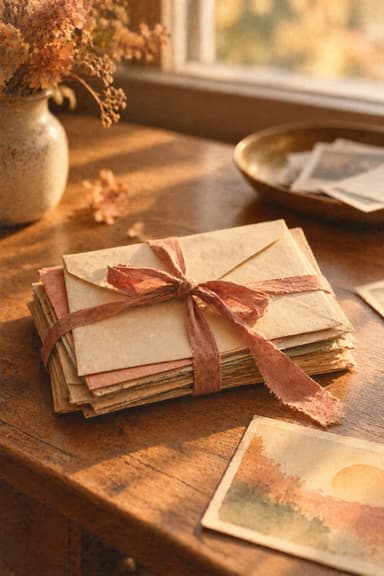


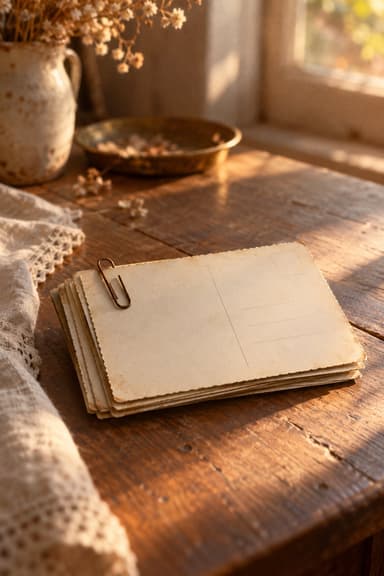
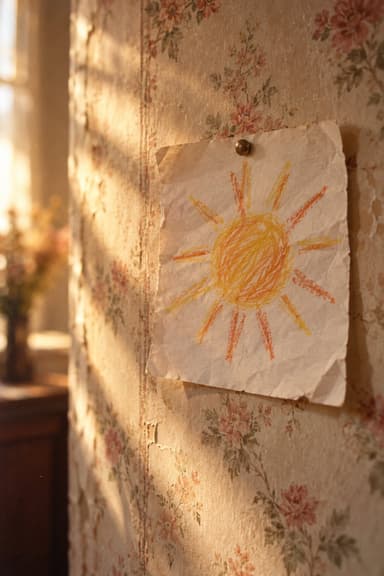
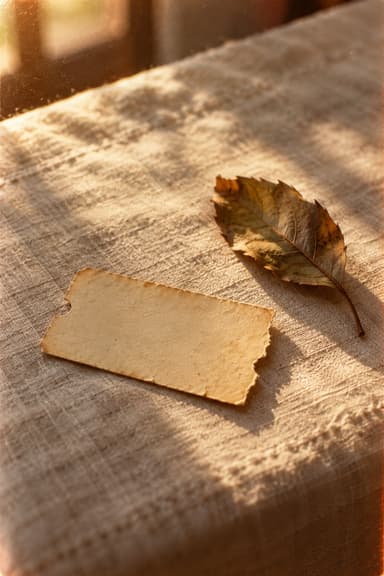

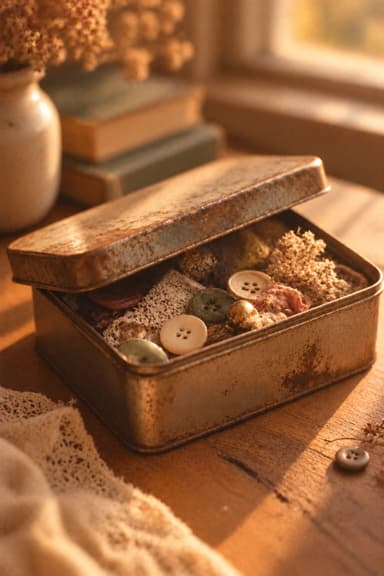

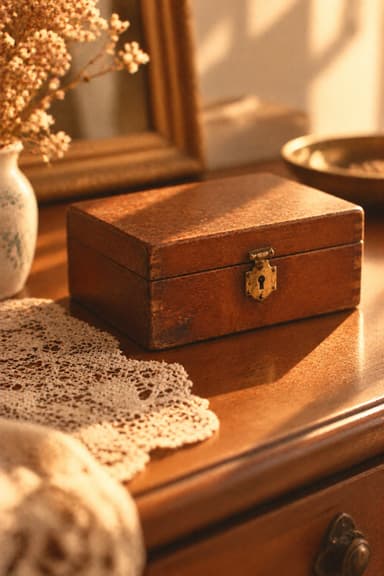
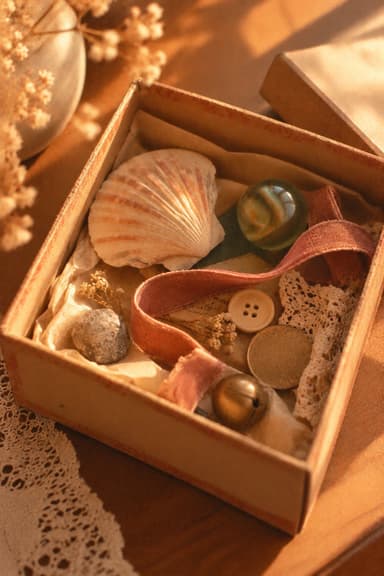
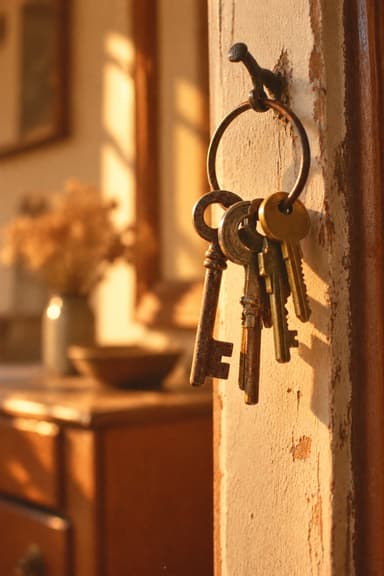
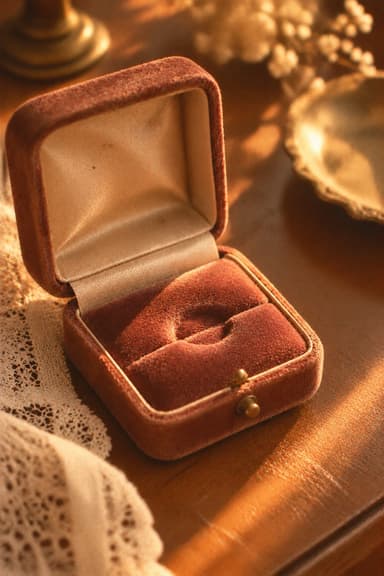
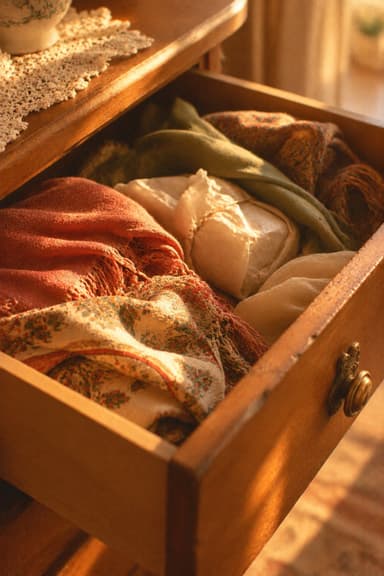

Open the deck to see all 51 and choose the objects for your session.
Questions to ask
Prompts that work with these cards
Example spreads
Three layouts to start from
Positions guide the story; they never decide what an object means.
What I carry
3 cards
- 1What I received
- 2What I keep
- 3What I pass on
Keep or let go
2 cards
- 1What I hold on to
- 2What I am ready to put down
Remembering someone
4 cards
- 1Something that was theirs
- 2Something we shared
- 3Something they taught me
- 4Something I still want to say

The artwork
Warm film, window light
Every card is original artwork created for MindTrays in the look of an analog film photograph: visible grain, soft halation, faded honey, peach and dusty-rose tones, shallow focus — like a picture found in a family shoebox.
There is no readable writing anywhere: envelopes are blank, photographs lie face-down. Cards render at 1024×1536, sharp enough to zoom into the one scratch a client noticed.
How to work with it
A session in four moves
Set the theme
“Someone I miss”, “a chapter of my life” or “what I keep” — one theme, the cards face up or by drawer.
Choose an object
The client picks the thing that belongs to the theme. Ask whose it was, where it lives now, how it feels in the hand.
Let it tell
Follow the object, not the facts: where it has been, who used it, what it saw. Add a second card when the story turns.
Decide what to keep
Close with one card for what the client carries forward. The spread saves with the session for next time.
Why this deck
Made for stories that are hard to start
Objects open the door
Talking about a mug is easier than talking about a mother. The object carries the feeling until the person is ready to.
More than nostalgia
Seven drawers cover loss and absence, but also repair, use and inheritance — what was mended and what is handed on.
One deck for every language
No words on the cards, no faces to compare with — the same deck works across languages, ages and cultures, in person and online.
Questions
About this deck
How are picture cards used in grief work?
What are the cards for in narrative therapy?
How many cards are in the deck?
Why are there no people on the cards?
Can I use it with older adults or in reminiscence work?
Can I use it online?
Other decks
Pairs well with


Find the thing that holds your story
Open MindTrays Kept Things, choose the object that belongs to someone you remember, and tell where it has been. Working remotely? Start a collaborative session and send the link.
