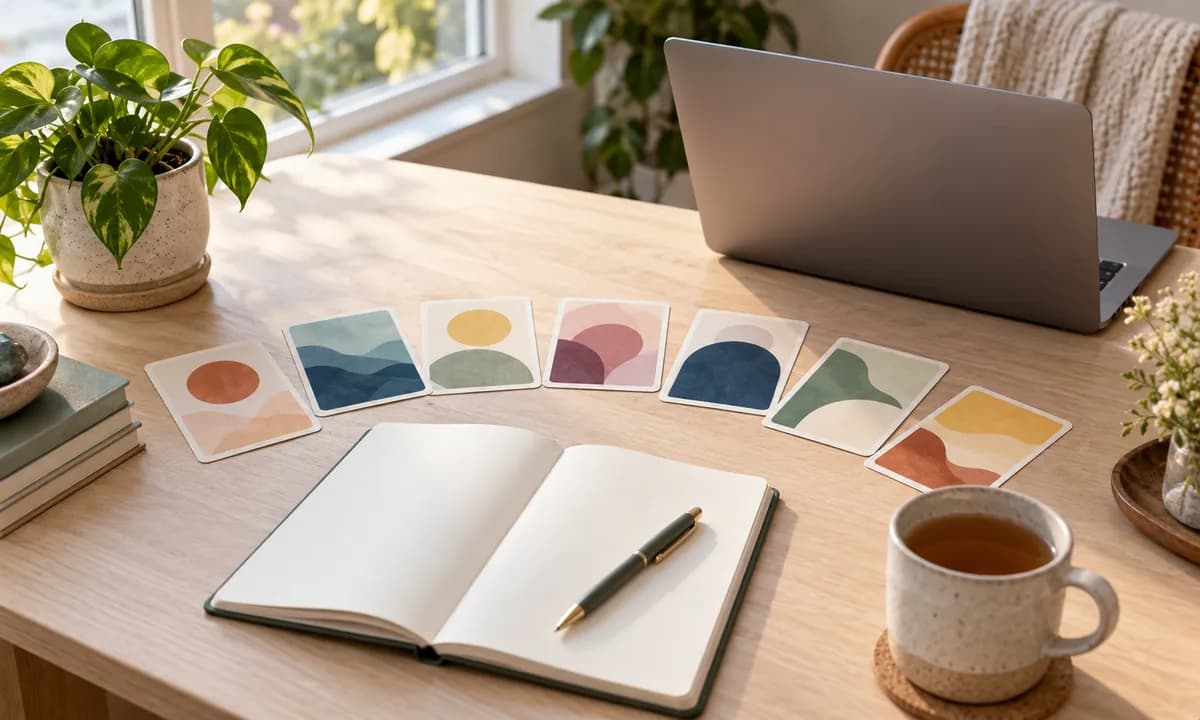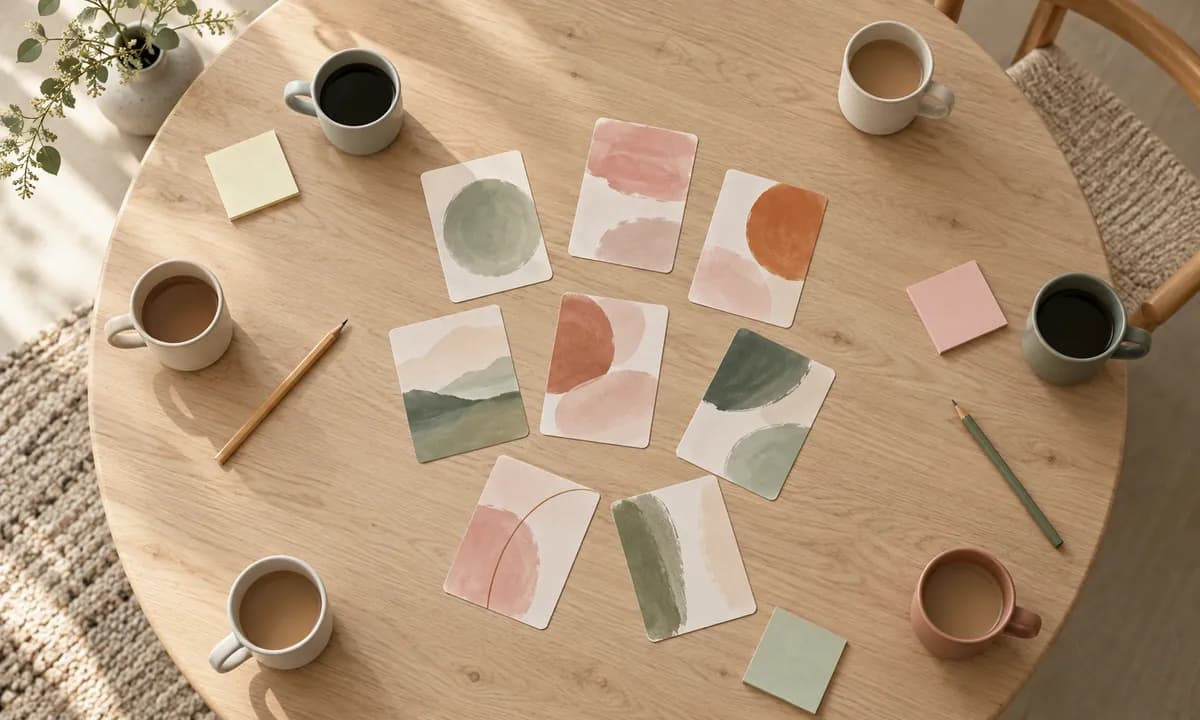
A metaphorical card gives a coaching conversation a focal point; the right question turns the image into insight. The strongest questions are open, present-tense, and genuinely curious — they invite the client to project their own meaning onto the card rather than decode a "correct" one. Below is a practical set of coaching questions, organized by the phase of a session.
Why Pair Questions With Cards
Cards and questions do different jobs. The image lowers defenses and gives the client something concrete to respond to — far easier than answering "so, how are things?" cold. The question then directs that raw material toward the client's goal. Used together, they move a session from abstract talk to vivid, specific exploration.
One thing to keep in mind: these are not tarot cards. They carry no fixed meanings, so your questions should never ask "what does this card mean?" The card means whatever the client sees in it — and that projection is exactly the data you're working with. Good questions draw the projection out; they don't hunt for a hidden answer.
Opening the Session
Use a card to take the temperature and set focus:
- Choose a card for how you're arriving today. What drew you to it?
- If this image is your current situation, what's happening in it?
- What's the mood of this card, and how close is it to your week?
Exploring the Situation
Once a topic is on the table, deepen it:
- What part of this image stands out most? Why that part?
- If the figure or scene could speak, what would it say to you?
- What's just outside the frame of this card?
- Where are you in this image — and where would you like to be?
Working With Obstacles
When the client hits a block, a card can externalize it:
- Choose a card for what's in the way. What makes it feel stuck?
- What is this obstacle protecting you from, if anything?
- If this card could change by one small detail, what would shift?
Finding Resources and Strengths
Coaching leans toward what's strong, not only what's wrong. Invite the client to pull a card for support:
- Choose a card for a strength you can bring to this. Where do you see it in the image?
- Who or what in your life does this resource card remind you of?
- When have you used this quality before?
Moving Toward Action
Turn insight into a step:
- Choose a card for your next step. What's the smallest version of it?
- What does this image suggest you do differently this week?
- What would the person in this card do first?
Closing
End with integration:
- Pull a card for what you're taking away. What's the one word for it?
- How is this image different from the one you chose at the start?
A Few Facilitation Tips
- Stay curious, not interpretive. Resist the urge to tell the client what their card "shows." Ask; don't explain.
- Follow their language. If they call an image "heavy," use "heavy" back — their words carry the meaning.
- Let silence work. After a question, give the image time to land before filling the space.
- One question at a time. Cards already give a lot to hold; stacking questions dilutes the response.
Decks That Pair Well
- Resources — built for strengths-based questions and resourcing moments.
- Figures — faceless silhouettes, ideal for exploring roles and relationships.
- Essence — layered imagery for deeper work on emotions and inner roles.
For more on structuring a session around cards, see our guide on 10 ways to use metaphorical cards in a coaching session.
Try it in your browser
Open a deck, lay out a single card, and start a quiet reflection — on your own or with someone, in real time.