5 Common Mistakes Therapists Make When Using Metaphorical Cards (And How to Avoid Them)
Metaphorical cards are one of the most flexible, creative, and emotionally safe tools in therapy. They help clients access inner experiences that are hard to verbalize, bypass resistance, and discover new perspectives. But like any powerful method, they can be misused—often unintentionally.
Below are five common mistakes therapists make, why they happen, and what to do instead.
1. Interpreting the card for the client
This is the most widespread mistake—and the easiest to fall into. A therapist sees a card, notices a symbol, and immediately wants to help the client "understand" it.
But the moment we interpret the card for them, we take away their meaning-making process.
Why it happens
The therapist wants to be helpful.
Silence feels uncomfortable.
The card seems "obvious" from the therapist's perspective.
Why it's a problem
Clients stop exploring their own associations and start trying to guess what the therapist "wants to hear."
What to do instead
Ask open questions.
Reflect, don't interpret.
Let the client lead the meaning-making.
To understand why images bypass our defenses so effectively, see our deeper look at the psychology of projective techniques.
2. Using cards as a diagnostic tool
Metaphorical cards are not projective tests. They don't reveal pathology, personality types, or hidden disorders.
Why it's a problem
Clients may feel judged, analyzed, or "read."
What to do instead
Use cards as conversation starters, not diagnostic indicators.
If you work with clients remotely, the same principle applies — see our step-by-step guide to running an online session with metaphorical cards.
3. Forcing the "right" card or the "right" interpretation
Sometimes therapists subtly push clients toward a card that "fits better" or toward an interpretation that seems more therapeutic.
Why it's a problem
Clients lose autonomy and stop trusting their own reactions.
What to do instead
Let clients choose freely—even if the card seems "wrong."
Giving clients real freedom of choice is easier when they have a rich, open-ended set of images to draw from. You can explore the full range of decks on MindTrays.
4. Ignoring the client's first reaction
The first reaction is often the most honest, spontaneous, and emotionally charged.
What to do instead
Pause and ask:
"What was your very first thought?"
"What did you feel in your body?"
Often, the first reaction contains the core of the session.
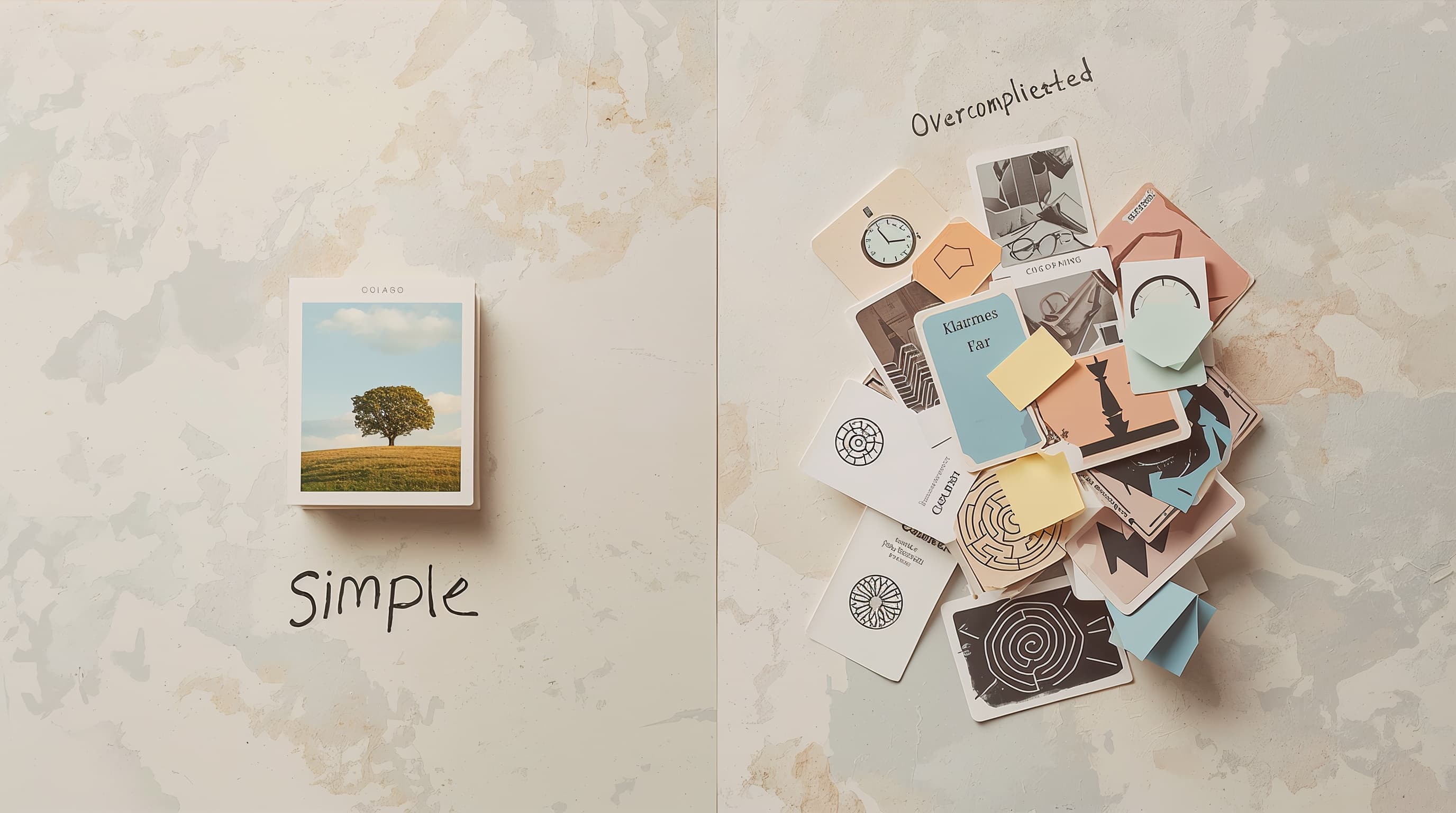
5. Overcomplicating the technique
Therapists sometimes turn a simple card exercise into a multi-step ritual with too many instructions.
Why it's a problem
Clients become confused or overwhelmed.
What to do instead
Keep it simple:
One card.
One question.
One moment of reflection.
How to avoid all five mistakes at once
1. Stay curious, not interpretive.
2. Stay client-centered, not technique-centered.
3. Stay simple.
4. Stay slow.
5. Stay flexible.
A final thought
Metaphorical cards work because they create a safe space for clients to explore their inner world without pressure, judgment, or "correct answers." When therapists avoid these five common mistakes, the cards become what they're meant to be: a gentle bridge between experience and language, between emotion and insight.
Try it in your browser
Open a deck, lay out a single card, and start a quiet reflection — on your own or with someone, in real time.