The Psychology of Projective Techniques: Why Images Bypass Our Defenses
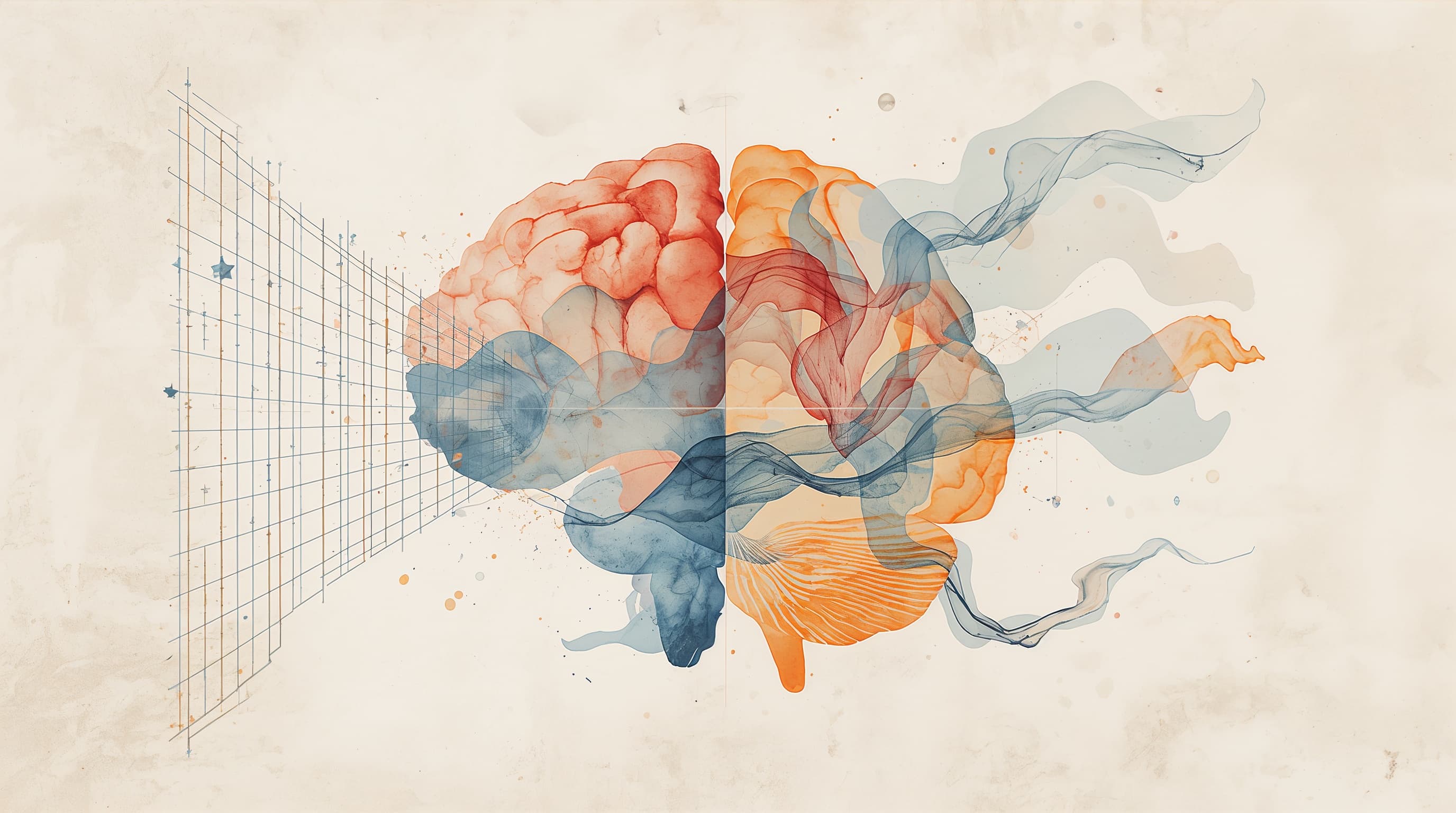
Projective techniques have been used in psychology for more than a century, yet they remain one of the most misunderstood — and most powerful — tools in therapeutic and coaching work. Whether in clinical settings, coaching conversations, or organizational facilitation, images consistently help people access insights that remain unreachable through direct questioning.
This article explores why images work, how projection functions, and what modern research says about the effectiveness of visual projective tools. For professionals who want to deepen their understanding of the mechanisms behind metaphorical cards, this is a comprehensive look at the psychology beneath the practice.
1. What Projection Really Is (Freud, Jung — briefly but accurately)
Projection is one of the oldest concepts in psychology. Though often simplified in popular culture, its original meaning is more nuanced and clinically relevant.
Freud: Projection as a Defense Mechanism
Freud described projection as a way the psyche protects itself from anxiety. When a person experiences an emotion, impulse, or belief that feels unacceptable or overwhelming, the mind “projects” it outward — attributing it to someone or something else.
In Freud’s model, projection is not deception; it is self‑preservation. The psyche externalizes what it cannot yet face internally.
Jung: Projection as a Path to Self‑Knowledge
Jung expanded the idea. For him, projection was not only defensive but also informative. He believed that people naturally project parts of the unconscious onto symbols, images, and other people. These projections reveal aspects of the psyche that are otherwise hidden.
Jung wrote that projection “makes the unconscious visible.” This is the foundation of modern projective techniques: images become mirrors.
Why this matters for practitioners
When a client responds to an image, they are not describing the image — they are describing themselves. This is why metaphorical cards, drawings, and symbolic objects are so effective: they invite the psyche to speak in its native language — imagery.
2. Right Brain vs. Left Brain: Why Images Access What Words Cannot
Although the left/right brain distinction is often oversimplified, neuroscience still supports a meaningful difference in how verbal and non‑verbal information is processed.
Left Hemisphere: Language, Logic, Linear Thinking
The left hemisphere specializes in:
-
verbal reasoning
-
categorization
-
analysis
-
narrative construction
When clients speak, they often use the left hemisphere to explain, justify, or rationalize their experience.
Right Hemisphere: Emotion, Imagery, Intuition
The right hemisphere is dominant in:
-
visual processing
-
emotional tone
-
metaphor
-
holistic perception
-
implicit memory
This is where felt experience lives — sensations, moods, associations, and unspoken beliefs.
Why this matters
When you ask a client, “How do you feel?” you activate the left hemisphere — the part that wants to give a socially acceptable, coherent answer.
But when you show a client an image, you activate the right hemisphere — the part that holds emotional truth.
This is why projective techniques are so powerful: they bypass the verbal gatekeeper and access the emotional core.
3. Why Images Feel “Safer” Than Words
One of the most important psychological mechanisms behind projective techniques is emotional safety.
Images create distance
When a client talks about a picture, they are not talking about themselves — at least not directly. This creates a buffer that reduces shame, fear, and self‑criticism.
Instead of saying: “I feel lost.” a client can say: “This image looks like someone who doesn’t know where to go.”
The emotional content is the same, but the perceived vulnerability is lower.
Images reduce performance pressure
Words feel final. Images feel exploratory.
Clients often fear:
-
saying the “wrong” thing
-
being judged
-
revealing too much
-
not knowing how to articulate their experience
Images remove these barriers. There is no “correct” interpretation — only personal resonance.
Images activate implicit memory
Implicit memory stores emotional experiences that were never verbalized. Images can evoke these memories without requiring the client to consciously recall them.
This is why clients often say:
“I don’t know why I chose this card, but it feels important.”
Images allow symbolic expression
Symbolic language is inherently safer than literal language. A stormy sky can represent anger, grief, fear, or transition — without forcing the client to name the emotion prematurely.
4. Scientific Research on the Effectiveness of Projective Techniques
Although early projective tests (like the Rorschach) were controversial, modern research paints a more nuanced and supportive picture — especially for non‑diagnostic, exploratory, and therapeutic use.
A. Neuroscience: Images activate emotional processing faster than words
fMRI studies show that:
-
images activate the amygdala and limbic system more rapidly than verbal stimuli
-
visual metaphors engage both hemispheres simultaneously
-
symbolic imagery increases activity in regions associated with meaning‑making
This supports the idea that images access emotional material more directly.
B. Cognitive psychology: Dual‑coding theory
Allan Paivio’s dual‑coding theory demonstrates that information processed both visually and verbally is:
-
better remembered
-
more emotionally salient
-
more easily integrated
Projective images leverage this dual pathway.
C. Trauma research: Non‑verbal expression is essential
Studies by van der Kolk and others show that trauma is stored in sensory and emotional memory, not verbal memory. This is why trauma‑informed therapy often uses:
-
drawing
-
sand trays
-
metaphorical images
-
somatic metaphors
Images allow clients to express what cannot yet be spoken.
D. Coaching and organizational psychology
Research in coaching shows that visual tools:
-
increase insight generation
-
improve emotional regulation
-
enhance goal clarity
-
strengthen self‑efficacy
Teams using visual metaphors report higher engagement and psychological safety.
E. Projective techniques in positive psychology
Studies on strengths‑based interventions show that metaphorical images help clients:
-
identify strengths more accurately
-
connect strengths to real situations
-
internalize positive self‑concepts
This aligns with the use of tools like the Resources Deck.
5. Practical Implications for Practitioners
Understanding the psychology behind projective techniques allows professionals to use them more intentionally and ethically.
A. Use images when clients struggle with words
Images are especially helpful when clients:
-
feel stuck
-
intellectualize
-
minimize emotions
-
“don’t know what to say”
-
feel overwhelmed
The image becomes a bridge.
B. Ask open, non‑leading questions
Examples:
-
“What stands out to you here?”
-
“What part of this image feels familiar?”
-
“What might this represent for you right now?”
Avoid interpreting for the client.
C. Normalize projection
You can say:
“People often see different things in the same image. Whatever you notice is meaningful.”
This reduces self‑doubt.
D. Use images to explore defenses gently
If a client chooses a chaotic image but insists they feel “fine,” this discrepancy becomes clinically useful.
E. Integrate images with verbal processing
After exploration, ask:
-
“If this image could speak, what would it say?”
-
“How does this connect to your current situation?”
-
“What resource or insight does this image offer you?”
This helps integrate right‑brain insight with left‑brain articulation.
F. Use images in online sessions
Digital tools like MindTrays allow clients to:
-
browse cards
-
select intuitively
-
save choices
-
reflect visually
For more on this, see digital vs. physical metaphorical cards.
G. Choose images carefully
Effective projective images are:
-
open‑ended
-
emotionally evocative
-
culturally neutral
-
non‑literal
-
safe and non‑triggering
This is why high‑quality decks matter.
Conclusion: Why Images Work in Therapy and Coaching
Images bypass defenses because they speak the language of the unconscious. They activate emotional processing, reduce vulnerability, and allow clients to express complex internal states safely and symbolically.
Modern neuroscience, cognitive psychology, trauma research, and coaching studies all converge on the same conclusion:
Projective techniques work because they access parts of the psyche that words cannot reach.
For practitioners, understanding the psychology behind these tools is not just academically interesting — it directly improves the depth, safety, and effectiveness of your work.
Try it in your browser
Open a deck, lay out a single card, and start a quiet reflection — on your own or with someone, in real time.