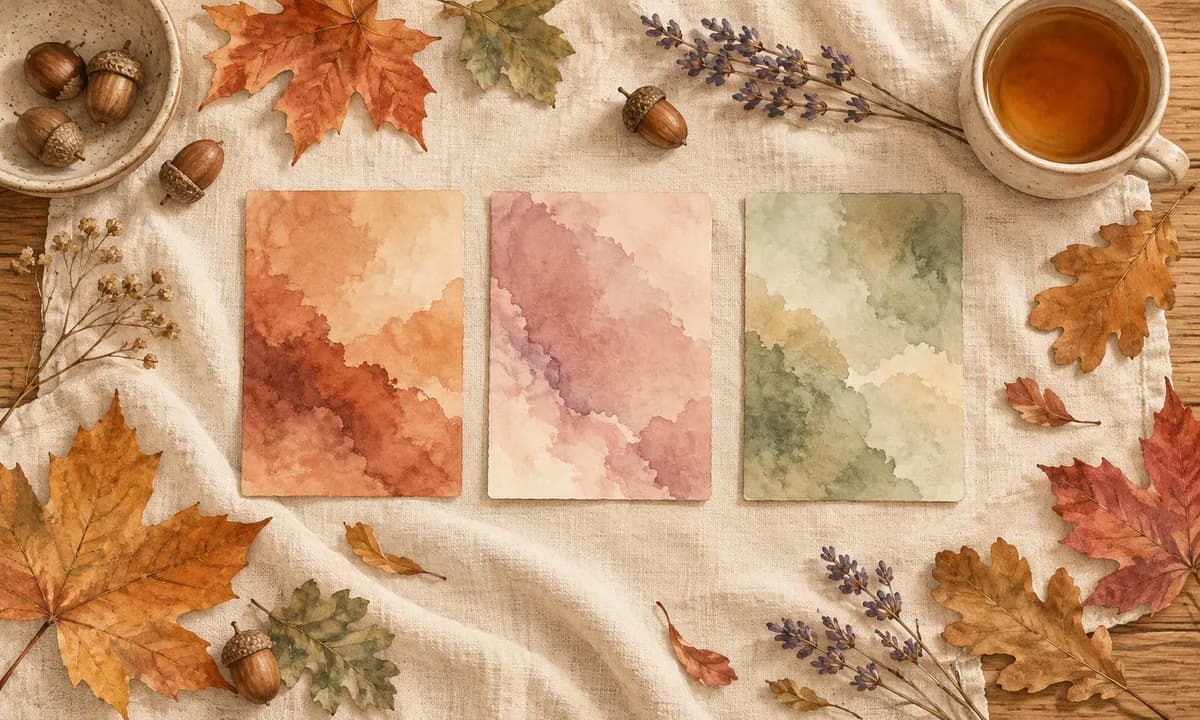
When anxiety rises, the mind gets loud. Thoughts loop, feelings blur together, and the whole experience can feel like "too much" without resolving into anything you can actually name. In moments like these, words can be hard to find — and a single image can offer a gentler way in.
This is a calm, non-clinical guide to using metaphorical cards as a self-check-in when you're feeling anxious. It won't make anxiety disappear, but it can help you slow down, notice what's happening inside, and find a steadier place to stand.
Why an Image Helps When Words Are Hard
Anxiety often outruns language. You feel the tightness in your chest or the spin in your thoughts well before you could explain it. A metaphorical card gives that feeling somewhere to go. Instead of straining to describe what's happening, you can look at an image and say, "It feels like that" — the storm, the narrow path, the still water.
That small move does two useful things. It creates a little distance between you and the feeling, which can make the feeling more manageable. And it helps you name what's going on, which research on emotion consistently links to feeling more regulated. The image becomes a mirror you can talk to instead of a problem you have to solve.
It's worth saying that this isn't fortune-telling, and the card isn't predicting anything about your worries. Metaphorical cards have no fixed meanings — whatever you see is coming from you. The card is simply a gentle prompt for noticing.
A Gentle Check-In You Can Do in a Few Minutes
When you notice anxiety building, try this. There's no right way to do it, and you can stop at any point.
1. Slow your pace first
Before reaching for a card, take one slow breath out — a long exhale, slightly longer than the inhale. You're not trying to force calm, just to lower the volume a little so you can look.
2. Pull a card for "how I feel right now"
Let one image find you. Don't search for a calming picture on purpose; let it reflect the actual state you're in, even if that's tense or unsettled. Naming the real thing is more grounding than reaching for a pleasant one.
3. Name what you see, gently
Describe the image and the feeling it mirrors, as plainly as you can: "This looks like noise with no edges," or "This feels like waiting for something that won't come." You're putting words to the wordless, slowly and without pressure.
4. Pull a second card for "what I need"
Now draw one more, this time for what would help — even slightly. Ground, space, rest, a single next step. Ask: what small thing does this image point me toward? Let the answer be modest. A glass of water and a few minutes by a window is a real answer.
5. Take one small, kind action
Close by doing one tiny thing the second card suggested. The aim isn't to fix the anxiety — it's to respond to yourself with a little care, which is often what shifts the moment.
Prompts for Anxious Moments
If you'd like questions to sit with, choose one:
- Where do I feel this in my body right now?
- If this anxious feeling had an image, which card comes closest?
- What is this worry trying to protect me from?
- What would help me feel even ten percent steadier?
- What is actually within my control today, and what isn't?
Decks That Suit Anxious Moments
Softer, more open imagery tends to work best when you're already feeling activated:
- Nature's Whisper — calm landscapes and natural textures that invite breathing room rather than demand interpretation.
- Resources — images of inner supports and strengths, helpful when you need to remember what you can lean on.
- Where I Am Now — for simply locating yourself in the present moment, one card at a time.
A Gentle Note
A card-based check-in is a supportive self-reflection practice, not a treatment. If anxiety is frequent, intense, or getting in the way of daily life, that's worth taking seriously — and a licensed therapist or doctor can offer real, personalized support. Using cards alongside that kind of help is perfectly compatible; they're a way to stay in gentle contact with yourself between conversations.
When the Mind Feels Loud, Start Small
You don't need to untangle everything at once. One breath, one image, one honest sentence about what you see — that's enough to begin softening a hard moment.
Try it in your browser
Open a deck, lay out a single card, and start a quiet reflection — on your own or with someone, in real time.