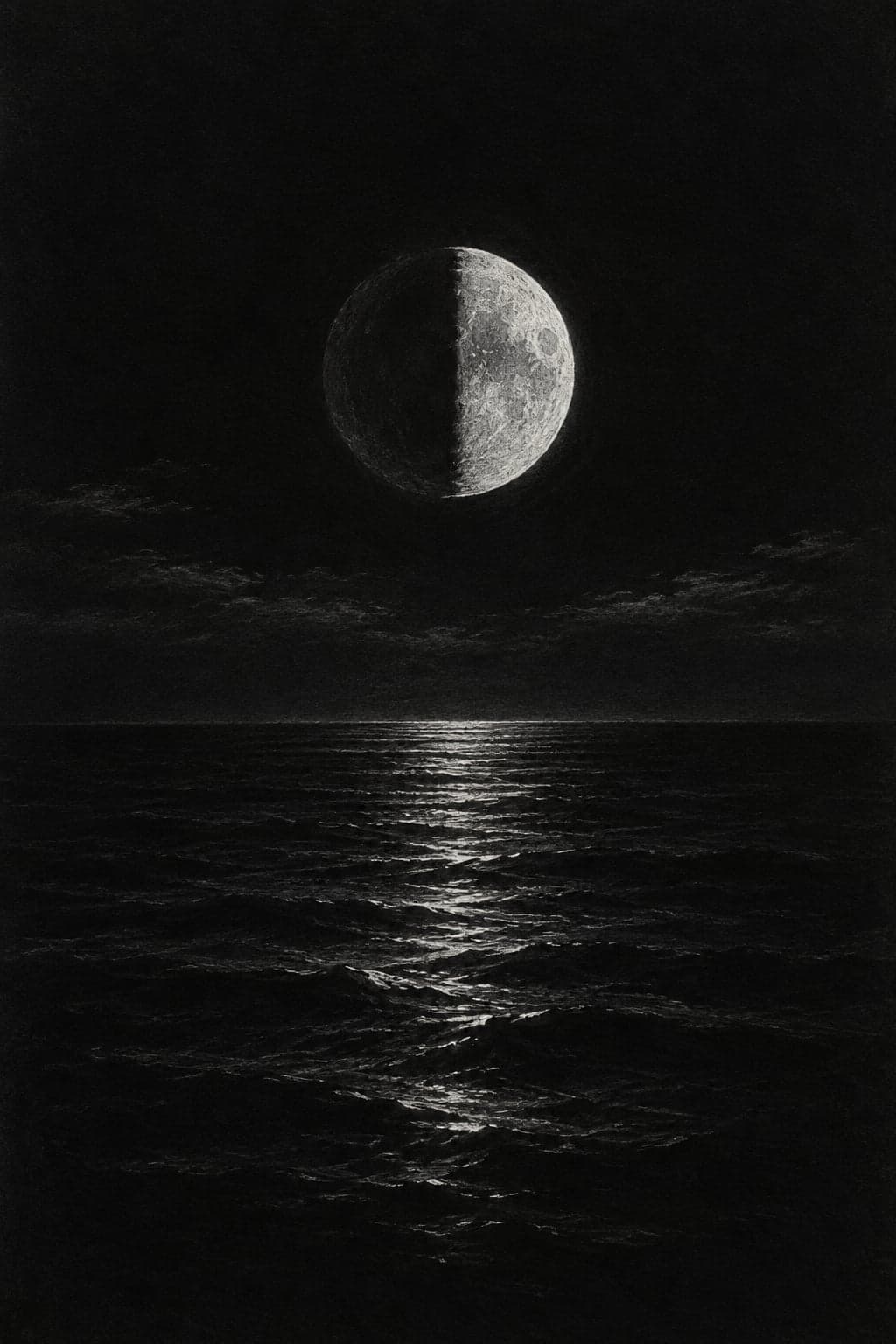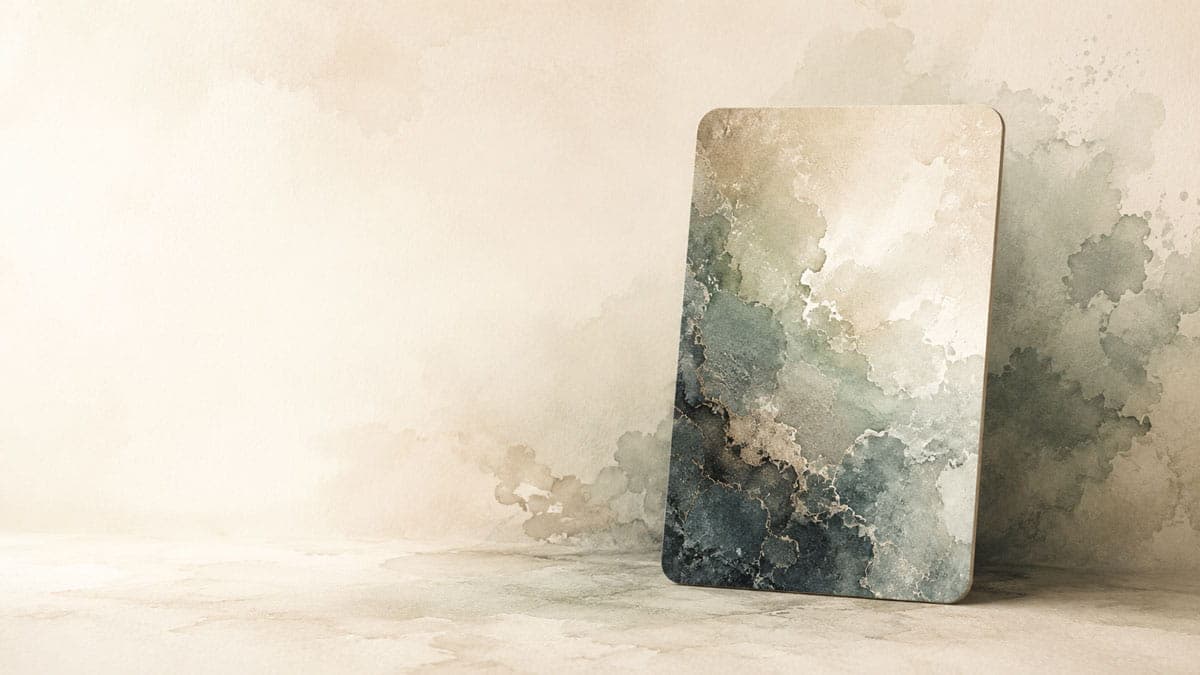
Some inner states have no clear picture. You can't always point to a scene that captures how a grief sits in the chest, or how a slow hope begins to warm after a hard season. But you can often feel the texture of it — rough, heavy, tangled, luminous, raw. The new Textures & Abstractions deck works exactly there, offering 50 richly varied abstract surfaces as mirrors for emotion and meaning through shifts in color, depth, and atmosphere.
This is a short introduction to what the deck is, why abstraction reaches places representational images can't, and how to begin using it.
Why Abstraction Works So Well
Most metaphorical decks show something — a landscape, a figure, an animal. Those images are powerful, but they also come with content: a viewer sees a "forest" or a "person" and reads meaning partly through what the thing is. Abstraction removes that layer. With no object to name, the mind has nothing to interpret except the felt quality of the image — the tension in a jagged edge, the calm in a wash of blue, the unease of a muddy, clotted surface.
This makes Textures & Abstractions especially good for emotion that resists description. When a client says "I don't know how I feel, I just feel… off," a representational card can pull them toward story too quickly. An abstract surface lets them stay with the raw texture of the state long enough to understand it.
A Note: This Is Not Tarot
Abstract imagery can look mysterious, so it's worth saying plainly: metaphorical cards are not Tarot. These surfaces carry no symbolic system, no fixed meanings, no fortune. A dark, cracked texture doesn't signify anything in particular. Its meaning is entirely what the viewer brings to it. The deck reflects; it does not read.
What's Inside
Textures & Abstractions contains 50 original images spanning a wide emotional range, so any inner weather can find a match:
- Soft and soothing surfaces — for calm, tenderness, rest, and safety.
- Turbulent and fractured textures — for anxiety, conflict, anger, and overwhelm.
- Deep and layered fields — for complexity, ambivalence, and things that don't resolve.
- Luminous and opening tones — for hope, clarity, relief, and emergence.
- Heavy or muted surfaces — for grief, numbness, fatigue, and quiet.
The point isn't to catalogue textures, but to offer enough range that a feeling can recognize itself.
Ways to Use the Deck
The Texture Check-In
Ask, "Which surface feels like your inner state right now?" Then explore it: Where in the image is the strongest pull? If you could touch it, what would it feel like? What would soften it? Because there's no object to explain, answers tend to come straight from the body.
Before and After
Invite one texture for how something feels now, and another for how the person longs for it to feel. The contrast between, say, a tight knotted surface and an open, breathing one can make a desired shift suddenly tangible.
Naming the Unnamed
For a feeling that won't come into words, let the client choose a texture and simply describe the image — its temperature, weight, movement. Very often, in describing the surface, they end up describing the emotion they couldn't reach directly.
For Personal Reflection
On your own, Textures & Abstractions makes a fine companion for wordless days. Draw one surface and, instead of asking what it means, ask what it feels like — and whether that texture matches something you've been carrying. A few written lines can turn a vague mood into something you can actually look at.
Working Digitally
As with every MindTrays deck, the whole set can be spread, shuffled, and rearranged on screen — in person, online, or alone. The abstract surfaces are especially satisfying to move around, letting you build small maps of feeling and watch how the textures relate. Nothing to print or store; just open and begin.
Begin with Textures & Abstractions
Not everything we feel has a shape or a story. This deck meets those states on their own terms — as texture, color, and atmosphere — and gives them just enough form to be seen. The invitation is simply to look, feel, and follow what the surface stirs.
Textures & Abstractions is live now. Explore it and the full collection at mindtrays.com/decks.
— MindTrays Team
Try it in your browser
Open a deck, lay out a single card, and start a quiet reflection — on your own or with someone, in real time.