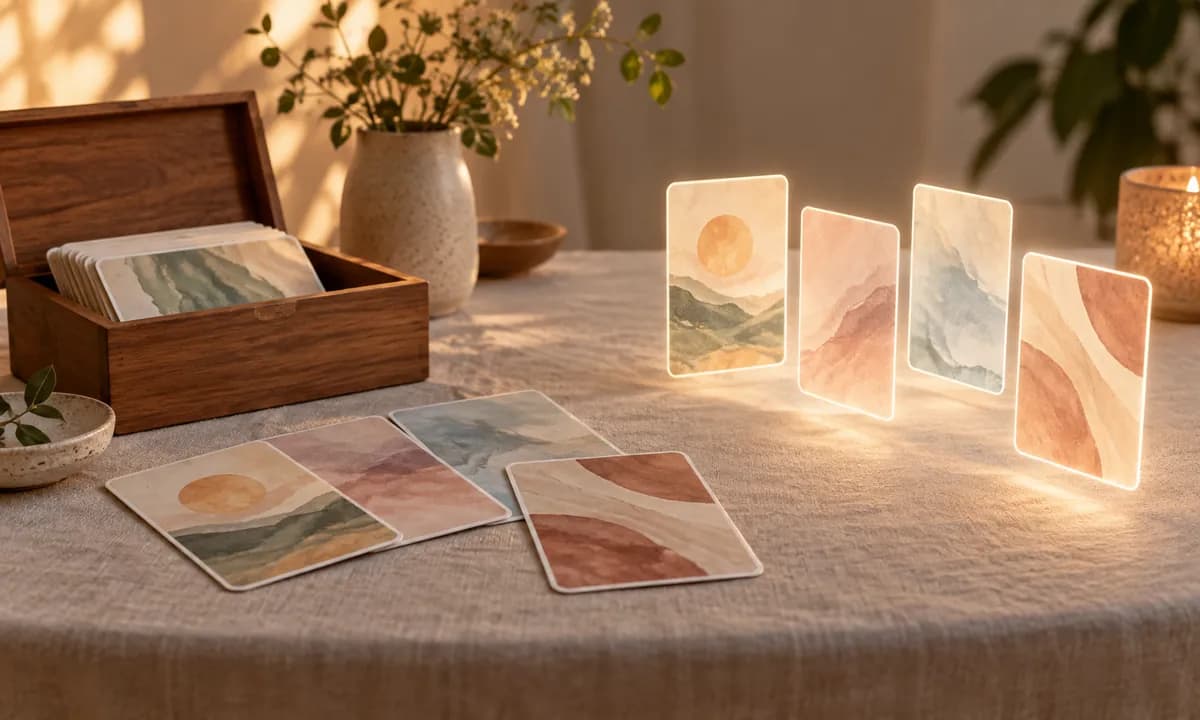
One of the first questions people ask when they pick up a metaphorical deck is a reasonable one: how do I read these? They turn the card over, wait for a meaning to arrive, and feel slightly lost when none does. That feeling is the whole point — and the key to reading these cards well.
This guide explains why metaphorical cards have no fixed meanings, and gives you five simple questions that turn any image into genuine insight.
"Reading" a Metaphorical Card Means Something Different
It helps to clear up a common confusion first. With tarot, "reading" a card means recalling what that card traditionally represents and applying it. Each card has an established meaning, and the skill is in knowing the system.
Metaphorical cards work in the opposite direction. They carry no fixed meanings whatsoever. A card showing a figure at a window might mean loneliness to one person, peace to another, and anticipation to a third — and all three are correct, because the meaning lives in the viewer, not the card. There is nothing to memorize and no booklet to check. "Reading" a metaphorical card simply means noticing what you bring to it.
This is why the five questions below aren't about decoding. They're about listening — slowing down enough to hear what the image stirs in you.
Question 1: What Do I Notice First?
Before any interpretation, just observe. What part of the image catches your eye? A color, a figure, an empty space, a direction of movement? Your first point of attention is rarely random. People are often drawn to the part of an image that mirrors something already alive in them — a tension, a longing, a question they're carrying. Start there, and stay with it for a moment before moving on.
Question 2: What Feeling Does It Bring Up?
Move from looking to feeling. What's the emotional tone of your response — calm, unease, warmth, heaviness, curiosity? Notice it in your body as much as your mind. The feeling often arrives faster and more honestly than any words you'd choose, which is exactly what makes images such useful tools. If the feeling surprises you, that's worth paying attention to.
Question 3: What Does This Remind Me Of?
Now let the associations come. What situation, person, memory, or part of your life does the image bring to mind? Don't filter for what "makes sense." A foggy path might remind you of a decision you've been avoiding; a doorway might call up a relationship in transition. These connections are the bridge between the picture and your actual life.
Question 4: If This Image Could Speak, What Would It Say?
This question gently bypasses the part of the mind that wants to stay logical and in control. By imagining the image — or a figure within it — speaking to you, you give yourself permission to voice something you might not say directly. People are often startled by what comes out: a reassurance, a challenge, a truth they already knew but hadn't admitted. Let it speak in its own words.
Question 5: What Is This Showing Me That I Hadn't Noticed?
Close by stepping back. Taking the whole image and everything it stirred, what becomes a little clearer than it was a few minutes ago? You're not looking for a grand revelation — often it's something small and useful: a need you'd been ignoring, a feeling you can now name, a next step that feels a touch more obvious. That small shift is the reading.
A Short Example
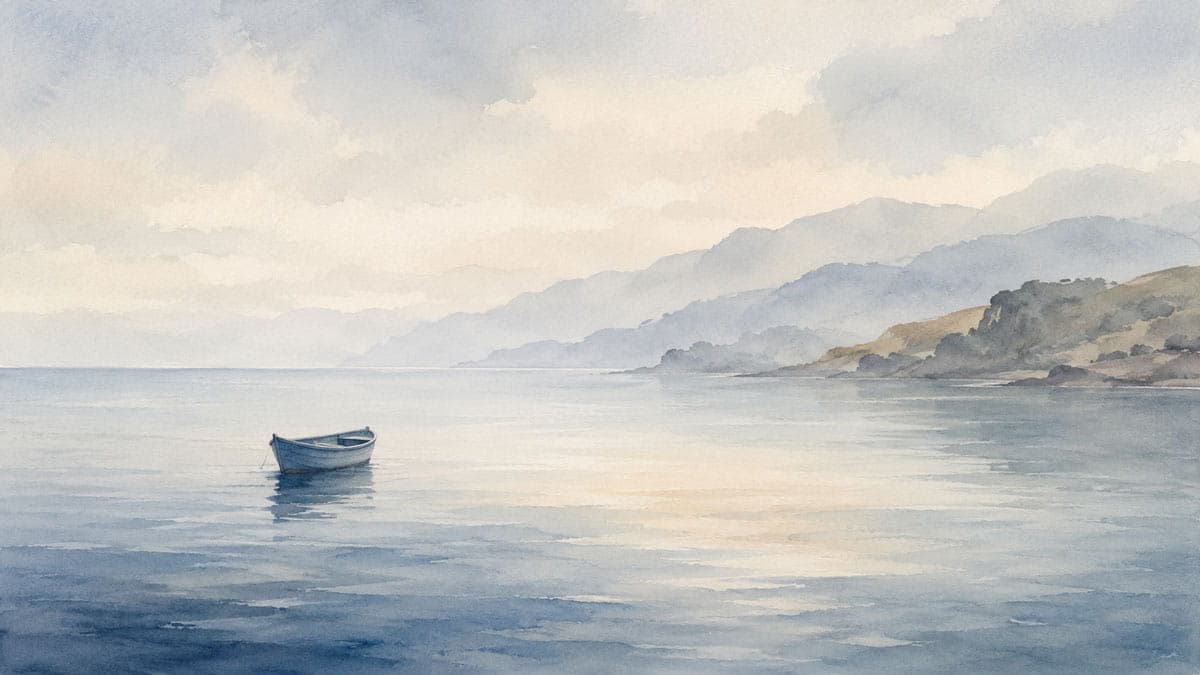
To see how the questions flow together: one person, working alone with a card showing a small boat on open water, noticed first the distance to the far shore (Q1), felt a flicker of anxiety (Q2), and realized it reminded them of a career change they'd been putting off (Q3). Asked what the boat might say, the answer that surfaced was simply, you already left the harbor (Q4). What that showed them (Q5) was that the decision was, quietly, already made — they were just waiting for permission to admit it. No fixed meaning produced that. Their own associations did.
A Few Things to Avoid
- Don't reach for the "right" answer. There isn't one. The moment you start guessing what a card is "supposed" to mean, you've left your own experience behind.
- Don't rush past discomfort. An image that feels uncomfortable often has the most to offer. Stay with it a beat longer than feels natural.
- Don't over-analyze. If you find yourself building an elaborate theory, come back to the simple questions. The first, plainest response is usually the truest.
Try It With a Real Card
Reading these five questions is one thing; using them is another. Open a deck, pull a single card, and walk through the questions slowly. The practice gets richer every time you do it.
The easiest place to start is a free daily card pull — draw one card, no account needed, and try the five questions on it. When you want the full decks to explore further, they're all on MindTrays:
Try it in your browser
Open a deck, lay out a single card, and start a quiet reflection — on your own or with someone, in real time.