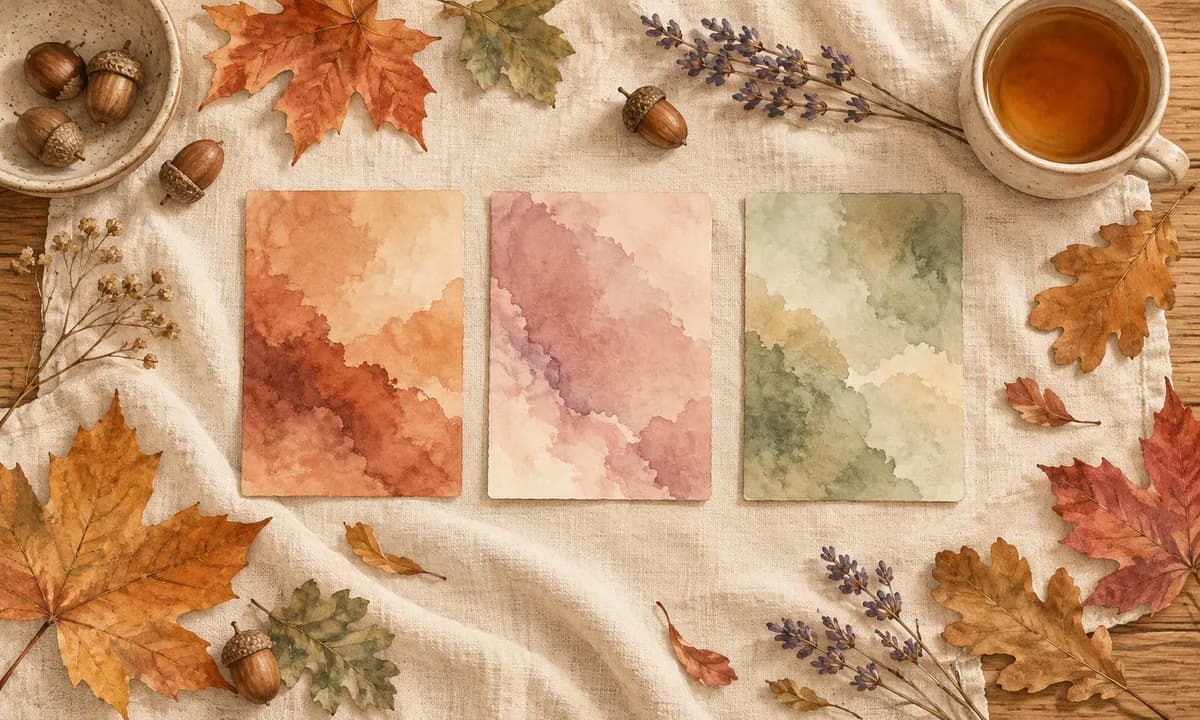
Most self-reflection advice asks for more than a busy day can give: thirty quiet minutes, a perfect notebook, the right mood. A daily card pull asks for almost nothing. You open a deck, let one image find you, and spend a minute or two noticing what it stirs. That's the whole practice — and over time, it becomes one of the most honest conversations you have with yourself.
This guide explains what a daily card pull is, why such a small ritual works, and how to build it into a habit you actually keep.
What a Daily Card Pull Is — and Isn't
A daily card pull means drawing a single metaphorical card each day and using it as a starting point for reflection. The image isn't a prediction and it isn't a message from outside. It's a mirror. Whatever you see in it is coming from you — your mood, your week, the thing you've been quietly avoiding.
This is worth saying clearly, because the daily pull looks, on the surface, a lot like a daily tarot card. The two are not the same. Tarot cards carry fixed, traditional meanings that a reader interprets for you. Metaphorical cards carry no fixed meanings at all. There is no "correct" reading, no booklet to consult, nothing to memorize. The card simply gives your attention somewhere to land, and your own associations do the rest. If you'd like the longer version of that distinction, our overview of what metaphorical cards are walks through it in detail.
Why Such a Small Ritual Works
The power of a daily pull is precisely that it is small. A few reasons it tends to stick where bigger practices don't:
- It lowers the barrier to reflection. Looking at a picture is far less intimidating than facing a blank page. The image does the first bit of work for you.
- It catches your first reaction. Your immediate response to an image — before you've had time to tidy it up — often reveals a need, a worry, or a feeling you hadn't named yet.
- It builds a record over time. One card a day is unremarkable. Thirty cards across a month start to show patterns: the themes you keep returning to, the moods that come and go, the questions that won't leave you alone.
- It's a ritual, not a task. Rituals are grounding. A small, repeatable moment of stillness each day does something for the nervous system that a once-a-month deep dive never can.
How to Do a Daily Card Pull
The practice takes two to five minutes. Here's a simple version to start with.
1. Pause for a moment first
Before you draw, take one slow breath and notice how you're arriving — tired, wired, flat, hopeful. You're not trying to change the mood, just register it. This gives the card something to land against.
2. Pull one card
Let your attention choose without overthinking. If you're spreading the deck face-down, trust the first one your hand reaches for. If the cards are face-up, notice which image pulls you — or, just as usefully, which one you'd rather avoid.
3. Look slowly
Spend ten or twenty seconds simply observing. What do you notice first? What's the mood of the image? What surprises you? Let associations come on their own; you don't have to force meaning.
4. Ask one question
Pick a single prompt and answer it honestly. A few that work for almost any card:
- What does this image reflect about how I'm feeling today?
- What part of my life does this remind me of right now?
- What do I need today that this card helps me see?
- If this image could speak to me, what would it say?
5. Write a sentence or two
This is where the practice deepens. You don't need a paragraph — a few keywords or a single honest sentence is enough. Writing it down is what turns a fleeting impression into something you can look back on. One coach who uses the habit with clients put it simply: the writing is where the card stops being a picture and starts being a conversation.
Making the Habit Stick
The hard part of any daily practice isn't doing it once — it's doing it on the ordinary, unremarkable days. A few things help:
- Attach it to something you already do. Pull a card with your morning coffee, or right before you close your laptop for the day. A new habit holds better when it leans on an old one.
- Keep the bar low. On a rushed day, one word in your journal counts. Consistency matters far more than depth on any single day.
- Don't judge the "boring" cards. Some days the image won't seem to say much. Note that too — a flat response is information, not a failure.
- Look back weekly. Once a week, read your last few entries together. The patterns between cards often say more than any single pull.
Which Decks Suit a Daily Pull
Any deck works, but some lend themselves especially well to a quiet daily check-in:
- Nature's Whisper — soft, atmospheric landscapes that are easy to sit with first thing in the morning.
- Where I Am Now — built precisely for noticing your present state, one card at a time.
- Essence — richer and more layered, for days when you want to go a little deeper into emotions and inner roles.
If you want a fuller routine to grow into, our guide on using metaphorical cards for your own self-reflection expands the daily pull into a complete morning practice.
Start Today
You don't need experience, training, or the perfect quiet morning. You need one card and one honest minute. Open a deck, pull a card, and notice what it shows you — then do it again tomorrow.
The quickest way to begin is right here: pull a free daily card — one image, one honest question, about a minute, and no account needed. When you're ready for more, choose a full deck:
Try it in your browser
Open a deck, lay out a single card, and start a quiet reflection — on your own or with someone, in real time.