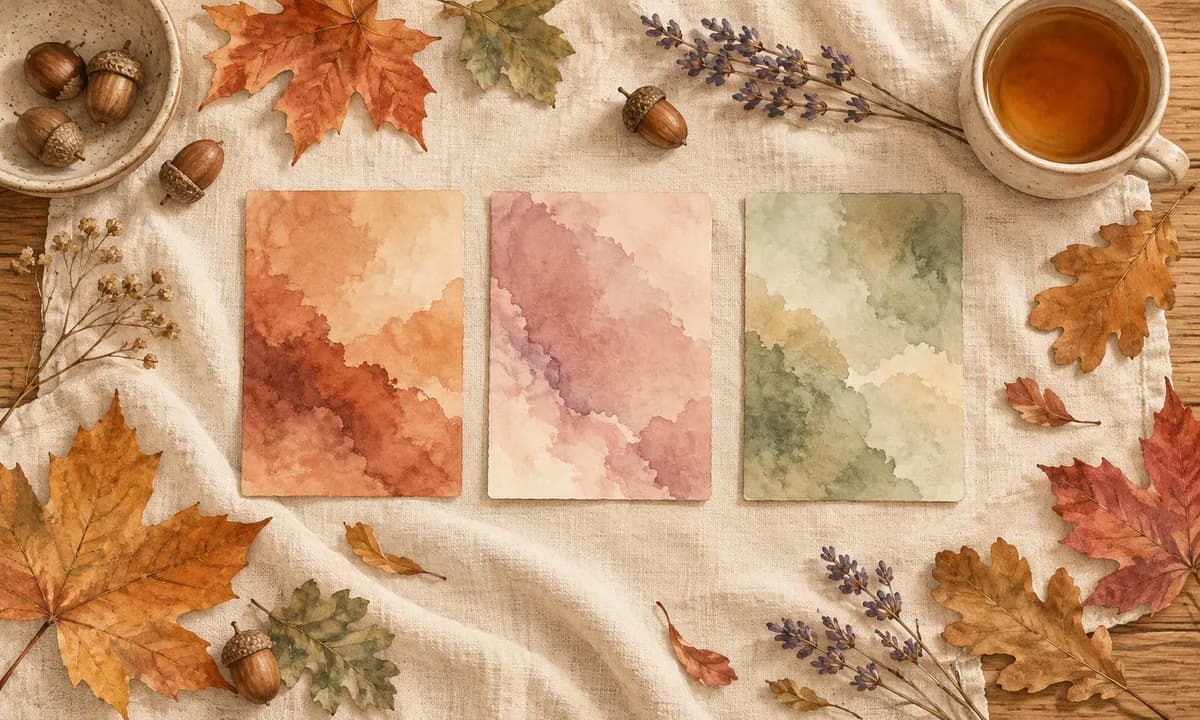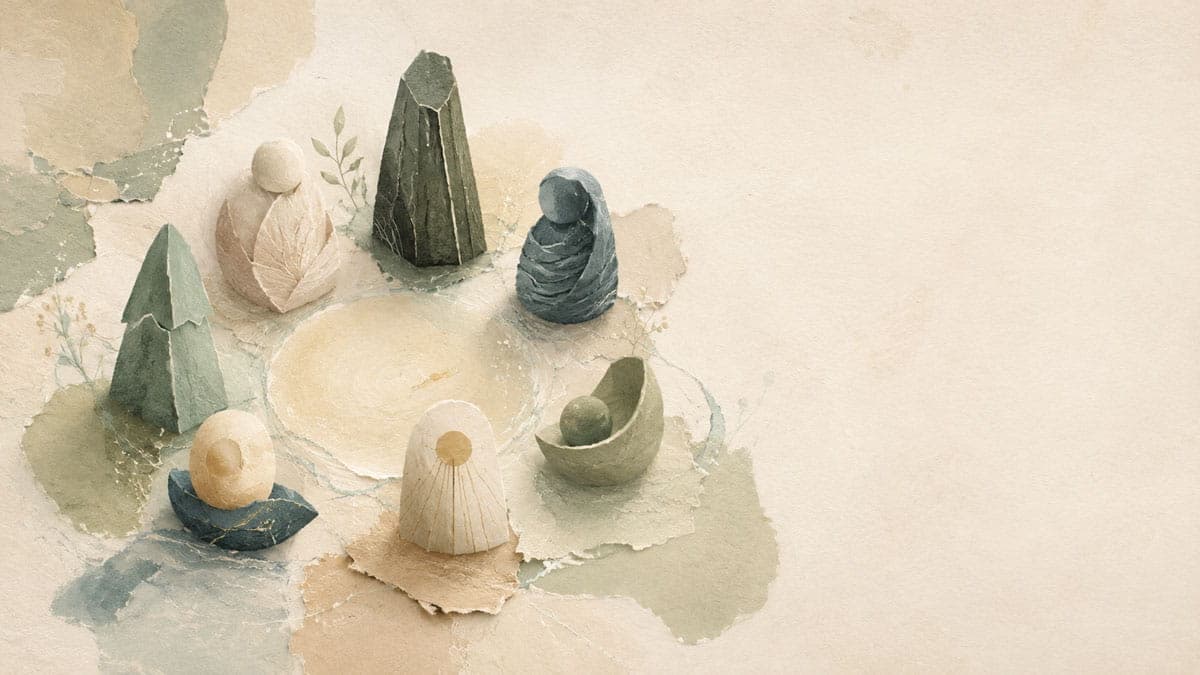
You've met them, even if you've never named them: the driven Achiever who won't let you rest, the tender Child who lights up at small joys, the wary Protector who keeps people at arm's length, the steady Sage who somehow knows what to do. These are archetypes — recurring inner characters that shape how we feel and act. Getting to know them is one of the most useful things you can do for self-understanding, and metaphorical cards make it surprisingly approachable.
Here's a beginner's introduction to archetypes, and a simple way to meet your own inner cast using cards.
What an Archetype Actually Is
The idea comes from psychologist Carl Jung, who noticed that certain figures and patterns appear again and again across cultures, myths, and dreams — the Hero, the Caregiver, the Rebel, the Wise Elder, the Shadow. He saw these as deep, shared templates in the human psyche.
You don't need the theory to use the idea, though. In everyday terms, an archetype is simply a recognizable "character" that lives inside you and takes over in certain situations. Most of us have several, and they're not problems to fix — they're facets of a whole person. The trouble only starts when one runs the show unexamined, or when two of them are at war without our noticing.
Why This Is Worth Doing
- It explains your patterns. When you can say "that was my Perfectionist reacting," a behavior stops being a mystery.
- It reduces inner conflict. A lot of stuckness is two archetypes pulling in opposite directions — the Adventurer wants to leap, the Guardian wants safety. Naming both helps you mediate.
- It reconnects you with strengths. Some of your most valuable inner characters may have gone quiet. Meeting them again brings their gifts back online.
Why Cards Work So Well Here
Archetypes are, by nature, images — figures, characters, presences. That makes them a perfect match for metaphorical cards. When you draw a card to represent a part of yourself, the image gives that abstract "character" a face and a mood you can actually see and talk to.
And since these cards hold no fixed meaning, what you notice in an image comes entirely from you. One person's Protector might appear in a card as a wall; another's as a watchful animal. Both are right, because the archetype is being revealed by your projection, not dictated by the card. (This, incidentally, is a good moment to remember these aren't tarot — there's no set cast of characters to memorize. Your inner world supplies them.)
Meeting Your Inner Cast: A Card Exercise
Give yourself twenty unhurried minutes and a deck.
1. Invite a few characters
Think of three or four inner "characters" you recognize in yourself. Don't overthink the labels — "the one who pushes me," "the one who wants to hide," "the one who takes care of everyone." Draw a card for each.
2. Meet each one
Take the cards one at a time. For each, ask:
- Who is this? What's their mood and energy?
- When does this part usually show up in my life?
- What does it want for me? What is it afraid of?
- What gift does it bring — and what's the cost when it takes over completely?
3. See how they relate
Lay the cards out together and notice the relationships. Which characters clash? Which support each other? Is one crowded into a corner while another dominates? This is often where the real insight lands — not in any single part, but in the dynamics between them.
4. Ask what's missing
Finally, pull one more card for a quality your inner cast could use more of — a voice that isn't getting much airtime. Steadiness? Playfulness? Courage? Let the image hint at what wants to be invited in.
Common Archetypes to Look For
To get you started, a few inner characters many people recognize:
- The Achiever / Driver — ambitious and capable; can tip into overwork.
- The Caregiver — warm and giving; can forget its own needs.
- The Protector — keeps you safe; can wall you off from closeness.
- The Inner Child — playful and vulnerable; holds spontaneity and old hurts alike.
- The Critic — pushes for standards; can turn harsh.
- The Sage — calm and wise; the steady voice underneath the noise.
These are starting points, not a checklist. Your cast is your own.
Meet Yours
Layered, character-rich decks work best for this. Essence is a natural fit — it's organized around inner parts, protectors, and vulnerable selves — and Figures offers evocative figures that lend themselves beautifully to archetype work.
Curious but not ready for a full session? Pull a free daily card and ask, "which part of me does this represent today?"
Explore all decks on MindTrays
— MindTrays Team
Try it in your browser
Open a deck, lay out a single card, and start a quiet reflection — on your own or with someone, in real time.